

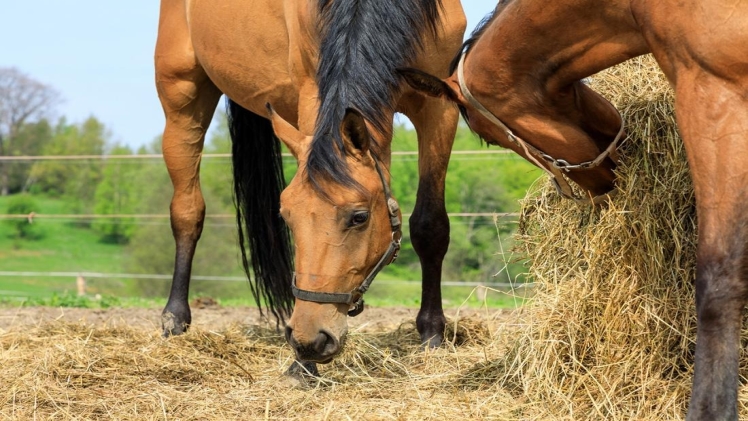
On average, horses consume about 2% of their body weight in hay each day. This is why choosing hay that will be good for your horse is important.
Color, smell, and texture are all great indicators of quality. Look for hay that is green and sweet-smelling and has small stems. Consider having a hay analysis done to quantify the nutrient content of the hay.
Grass Type
Grass hays such as timothy, bermudagrass, and tall fescue are thin-leafed grass plants that offer higher protein content than legumes but less energy. These hays should be free of dirt, mold, or other foreign objects which can cause health problems.
Typically, grass hay is lower in sugar and starch than legume hay, but it can still have high sugar levels. The protein and fat contents can vary from field to field, season to season, or even one year to the next, depending on weather conditions during growth and ripening.
Clover hays, such as white clover, red clover, and crimson clover, are higher in calcium and protein than grasses but not as calorie dense. Horses generally prefer these types of hay to grass hay.
Mixed hay often contains a medley of both grass and legume varieties and can be a good option for picky eaters. A popular mixture includes timothy/alfalfa or orchardgrass/clover.
The color and appearance of a bale of hay will tell you a lot about the quality. Pale, brown, or yellow hay indicates poorer quality, while green or dark-colored hay is better. The smell of the hay is also a good indicator. It is old and may have lost its nutrition if it has a musty odor.
You will want to avoid fescue hay that has developed seed heads as it can be high in fungal endophytes, which can lead to abortion or stillborn foals. The hay should also be free of dirt, mold, or other foreign matter, which can interfere with digestion and cause other health issues. If you are unsure about the quality of a bale, ask the grower to provide a feed analysis for your horse’s nutritional needs.
Leafiness
Hay serves many functions for our horses, including fiber and nutrients not always provided in pasture grasses. Additionally, it gives them something to do since a horse in a pasture may spend up to 17 hours foraging. Horses that eat less forage or hay can become bored and develop vices such as wood chewing. Hay selection is, therefore, extremely important for the horse’s health, performance, and digestive function.
The quality of hay is impacted by its species, its maturity at the time of harvest, and how it is stored. For example, timothy hay tends to have a higher nutrient content than bromegrass hay. The plant’s lignin content is also important, as overly lignin-rich plants may be less digestible for horses. Additionally, hay will have a higher protein content if hay is harvested before the seeds have matured.
In terms of storage, hay that is not properly stored will lose its nutrient content over time. This is particularly true for legume hays which will lose more than half of their nutrient content over a year in storage. This is a good reason to purchase only this season’s cutting of hay for your horses.
When selecting hay, it is a good idea to pick one that is clean and free of dust and mold. A hay that smells sweet and pleasant is usually high-quality, while an odor of ammonia or other unpleasantness can indicate mold or mildew. Also, look for hay that feels soft to the touch and does not break easily when a hand is pressed on it. Hay that breaks easily in the hand is likely to have been improperly handled or baled and will likely be poor-quality hay for horses.
Moisture Content
The moisture content of hay affects its palatability and nutritional value. It also influences how much the horse consumes. Most hay contains 10 to 15% moisture. This can be found in a hay analysis report under the “as sampled” column and the dry matter (DM) column. The DM value represents the water and nutrient values removed from the forage to get to its dried, nutrient-rich state that horses will consume.
Hay quality and nutrient content decrease as it sits around for multiple years, so a hay analysis is important when choosing the right hay to feed your horse. It’s a good idea to consult with a veterinarian or qualified equine nutritionist who can help formulate a horse feeding program that combines hay, grains, and supplements to meet the horse’s dietary requirements at the appropriate age, stage of development, and activity level.
Grass hay contains less protein and more carbohydrates than legume hay. They typically have lower calorie and energy content, but they are important sources of long-stem fiber that support digestive health in horses. Different grass hays vary in sugar and starch levels, with earlier cuttings with seeds having higher sugar content than later cuts stalkier.
It’s best to avoid hay that has been exposed to rain or snow, as it will have a higher risk of developing mold. In addition, the sun’s rays can accelerate the degradation of key nutrients in hay, particularly vitamin E. For this reason, you should store hay in a dark, cool, and dry area when not using it. This will help keep hay healthy and palatable for your horse.
Crude Protein
Horses spend 16 hours a day foraging, and the quality of their diet will impact their health, performance, and digestive function. Each horse has unique nutritional requirements based on their age, activity level, and physiological status. For example, horses in training have different energy requirements than those in maintenance. Horses with inflammatory conditions such as arthritis or chronic diarrhea may require low-starch foods. Horses with muscle diseases such as EPSM may have specific metabolic needs.
For this reason, evaluating a hay sample is the best way to determine the right feed for your horse. A hay analysis will give you valuable information such as moisture content, crude protein, and calculated energy content. A hay analysis will also help you choose the right kind of hay for your horse’s digestive system by providing a breakdown of sugar and starch content.
When choosing a hay sample, consider how it was harvested and which cutting it is from. The nutritional value of hay decreases over time, and the quality of a hay sample will greatly depend on its age and the conditions in which it is stored.
Grass hay typically contains between 7 – 19% crude protein and is low in calories. However, they are high in sugar and starch. In addition, grass hay can have a high concentration of nitrates which is an issue for horses with certain metabolic issues.
The best option is legume hays such as alfalfa which has a protein content between 17 – 25% and is low in sugar and starch. Alfalfa is also rich in calcium, iron, and zinc. However, it can be expensive. For this reason, many horse owners opt for a mix of grass and legume hay to provide a balance of energy, nutrient content, and palatability.
Crude Fiber
Grass hay contains high levels of fiber and is very digestible for horses. They also have a lower protein and energy content than legume hays. Grass hays such as timothy, tall fescue, and crested wheatgrass are good choices because they’re easy to cure and tend to be dust-free. The proteins in grass hays are digested and excreted in the form of urea, which doesn’t cause any problems for healthy horses, but if you have a horse with kidney or liver issues, then it is best to avoid hays that have more protein than they need.
Leguminous hays such as alfalfa, clovers, and alfalfa-ryegrass blends are very nutritious hays that have higher levels of protein, energy, and fiber than grass hays. However, they can be very high in lignin, which can make them less digestible.
It’s important to understand that a hay’s quality is determined by many different factors, such as the species, maturity at harvest, and storage conditions. Color and smell can be important indicators of the quality of hay, but it’s vital to have the hay tested to determine its actual nutrient content.
Hay performs a number of important functions in the horse’s diet, including providing fiber, nutrients, and boredom relief. It’s a good idea to choose the highest quality hay available in your area and to keep in mind your horse’s nutritional requirements. Horses at different stages of growth, breeding, and activity have unique dietary requirements that can only be met with the right hay selection. To help you select the right hay for your horse, you can submit your horse’s diet online, and one of our nutritionists will provide you with a personalized plan for free.